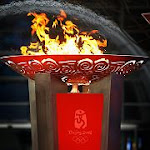
This is funny. The cadre is serious about its face. Which makes this very funny.
Also on www.rfa.org:
Crackdown in Tibet
WASHINGTON—The Chinese student who sparked outrage among Chinese
nationals who say she sided with Tibetans at a Duke University campus
protest says a public apology letter purported to have been written by
her father is a fake, Radio Free Asia (RFA) reports.
"That wasn't written by them. I have been in touch with my parents.
They told me very clearly that it wasn't written by them," Grace Wang,
20, from Qingdao, told RFA's Mandarin service. "I don't know who wrote
it."
"I'm sure. They were very clear about that. They also said they knew
I would never do anything to betray my country," Wang said. "They
said that they were just lying low, waiting in silence for the coming
of spring, as it were, until everyone had calmed down a bit and could
take a different view of the matter."
Wang claims that she was only trying to mediate at an April 10 campus
vigil, in which several dozen pro-Tibetan students were facing off
with several hundred Chinese students. She doesn't support Tibetan
independence. But she gave up under verbal assault from the Chinese
side.
A few hours later, she published an online essay to the Duke Chinese
Students and Scholars Association forum, calling for tolerance—and
sparking thousands of e-mails and hundreds of phone calls. Her
personal data appeared on the Internet, she received death threats,
her home in China was vandalized, and her parents are in hiding.
"My mother told me they support me," Wang told RFA's Cantonese
service "My father thinks he may have to change jobs—but he has no
regrets. I just had a phone conversation with them. My father is firm
in his position and mom also said ' Don't worry. '"
"My parents just told me that someone released a statement or
something under their names. They didn't see it and they don't want to
see it. They told me if I see it to just ignore it…They said they are
safe and I have to protect myself. Justice will prevail."
The phony apology, widely circulated on the Internet and purportedly
written by Wang's parents, said: "On behalf of Wang Qianyuan, we beg
the forgiveness of the people of China, the forgiveness of all the
Chinese in the world. We beg the entire nation to forgive her
ignorance and give her an opportunity to rectify her mistake."
"Every morning [and evening] we exchange e-mails to say we are still
alive, and that everything is fine," she said. "They are being very
tight-lipped and not saying much about it. I think they are on the
run. I don't know their exact location. They aren't telling me. I
think that's because they are afraid the Chinese government will
intercept the e-mail."
"I don't know when they moved out or where they are staying now. But
at least they seem to be all right according to their e-mails. At
least they say they're safe. Now it's got to the point where it's not
a question of what I say making them worry; it's me who's worrying."
An official at the Qingdao police station, contacted by telephone,
acknowledged that the Wang family had been threatened and their home
vandalized. He declined to give out further information. "We can't
present our information to the public," the officer said.
Wang said Thursday she had stopped attending classes and had extra
police protection, but she said she worried mostly about her family in
China. She said she didn't believe her life was in danger.
"My parents support some of my views and oppose others. But I
wouldn't expect them to think the same as me. That would be
terrifying, if everyone thought the same way."
Asked how her fellow students were treating her, she replied: "I was
beginning to think that the whole thing would just blow over. But
actually it's not going to blow over until there is some sort of
settlement, some justice. It doesn't really matter what they say to
me. The incident itself will probably blow over, but the problem will
remain. The truth is still out there if we want to go after it."
"I think some of them support me because they feel that I am a young
female student who is being bullied, but I tell them it's not me they
should support, but the truth. I would just like them to support the
right to freedom of expression."
"I have had threats from a lot of people, both spoken and written. I
get a lot of e-mails, but I don't read them. I just delete them. I
don't bother trying to find out who is sending them. I believe that
everyone has the right to free speech, and also the right to say the
wrong thing sometimes and to be forgiven for it."
Wang doesn't support Tibetan independence—she sees herself as a
champion of human rights and free expression. "I think that Tibet is
definitely a part of China. It is indivisible from China. This means
that we must deal with Tibet and Tibetans as our brothers and
compatriots," she said.
"That means that we should use other methods than those used to deal
with outsiders. You can use whatever methods you think expedient with
outsiders, even very forceful methods. But with Tibetans we are
dealing with our own relatives. There should be more reason and more
relatedness in our dealings with them."
Original reporting by Shen Hua for RFA's Mandarin service and Ho Shan
and Lydia Cheung for RFA's Cantonese service. Cantonese service
director: Shiny Li. Mandarin service director: Jennifer Chou.
Translation by Shiny Li and Luisetta Mudie. Written and produced in
English by Sarah Jackson-Han.
Friday, April 18, 2008

Thursday, April 17, 2008
Cadre pouting: "Goons and Thugs" hurt feelings: CNN must say it is sorry, or the cadre will develop eating disorders

What is likable about Cafferty is that he is reasonably without information, so that when he pops off, it is much the same as a beer drinker ending his pretzel-eating Schlitz binge with verbose willful empty and loud remarks. The cadre misses this irony and goes for the stampy-footy.
BEIJING (AP) - China rejected on Thursday CNN's response to its demand for an apology over remarks made by commentator Jack Cafferty after the Foreign Ministry summoned the network's bureau chief in Beijing the night before.
The demand came amid increasing accusations in China against foreign media over allegedly biased coverage of violent anti-government protests in Tibet and across western part of the country last month.
CNN has been singled out by the Chinese government and unknown activists who have phoned and e-mailed death threats to Western reporters. Most of the criticism of the Atlanta-based network concerns a photograph posted on its Web site weeks ago which cropped out Tibetans throwing stones at Chinese security forces.
CNN said Wednesday that commentator Jack Cafferty was referring to China's leaders - not the Chinese people - when he described them as a "bunch of goons and thugs," and apologized to anyone who thought otherwise.
However, Foreign Ministry spokesman Liu Jianchao rejected the apology and demanded CNN and Cafferty retract the remarks and "sincerely apologize to the entire Chinese people," according to a statement on the ministry's Web site
CNN Beijing bureau chief Jaime FlorCruz said he met with Liu Wednesday night but gave no details.
The famously curmudgeonly Cafferty had been speaking during an April 9 appearance on "The Situation Room," according to a transcript posted on the CNN Web site.
"I think they're basically the same bunch of goons and thugs they've been for the last 50 years," he said.
CNN has already pointed out a clarification Cafferty made Monday on show. "I was referring to the Chinese government, and not to Chinese people or to Chinese-Americans," he said of his "goons and thugs" comment.
"It should be noted that over many years, Jack Cafferty has expressed critical comments on many governments, including the U.S. government and its leaders," CNN's statement said.
Chinese at home and abroad have accused Western media of unjustly criticizing Chinese security forces for cracking down on protesters.
Angry protests by Tibetans, free-speech advocates and others dogging the Beijing Olympic Torch's passage through London and Paris have further stirred the anger. Thousands of foreign reporters are expected to be in Beijing to cover the August Games.
Numerous Web postings, YouTube videos and Facebook groups have criticized the Tibet news coverage, including a Web site called anti-cnn.com, which was set up especially to point out alleged media bias.
The entirely state-controlled media has joined in the vilification campaign, with the criticisms of CNN featuring prominently in Thursday's newspapers and TV shows.
A signed editorial in the Communist Party's flagship People's Daily attacked what it called Cafferty's "verbal violence."
"When people wake up and face the facts, there will be no more market for "information terrorism," the editorial said.
The editorial page of the English-language China Daily was two-thirds filled with attacks on Western media and exiled Tibetan leader the Dalai Lama, accused by Beijing of orchestrating deadly riots in Tibet's capital Lhasa and elsewhere. The Dalai Lama's India-based government-in-exile has denied the accusations and renewed appeals - echoed by a host of foreign leaders - for dialogue with Beijing.
Tibetans tell the truth: The cadre has no human rights. The IOC goofed. It read it as "he-man rights." The IOC might have looked up "human."
Note that Falun Dafa practitioners now get into the story. Better and better. Those separatists in the Dalai Clique are busy and spending lots of cash buying wreckers. The cadre needs to buy the Tokyo government in answer in order to get the Torch through Japan.

India deploys heavy security for Olympic flame
By Jo Johnson in New Delhi
Published: April 17 2008 14:50 | Last updated: April 17 2008 18:11
A nervous India on Thursday mounted a huge security operation to secure a safe passage for the Olympic torch through New Delhi, deploying more than 15,000 security personnel along a truncated route that was closed off to the public.
Police shut down the heart of Delhi and officials refused to reveal when the relay would take place, with the result that a ceremony meant to rally support for the Olympic ideal lacked much popular participation.
Although the Delhi leg concluded without serious incident, the high level of security underlined the extent to which the relay has been a rolling public relations disaster for China and left many questioning the benefits accruing to key sponsors.
Senior Coca-Cola executives in India defended their sponsorship of the torch relay and denied having any regrets over the company’s involvement, echoing comments by Neville Isdell, chief executive, at the group’s annual meeting on Wednesday.
Samsung, another top-tier Olympic backer, said it was “proud” six of its sponsored athletes would carry the “revered symbol through the crowded streets of India’s capital city”. In reality, the torch relay was visible to the public only on television.
Indian authorities had shortened the torch’s route to just 2.3km, from a planned 9km, to minimise scope for disruption. The last time the torch came to India, in 2004, it travelled 32km across Delhi.
Earlier, thousands of Tibetans staged a rival procession, chanting anti-Chinese slogans and attempting to storm Delhi’s Le Meridien hotel, where the torch was being guarded by the controversial blue-jumpsuited “torch attendants” provided by Beijing.
Tenzin Lobsang, a 25-year-old Tibetan participating in the counter-rally, said he hoped the “peace march” would bring global attention to human rights abuses in Tibet. “The torch procession should go on, but our voices must also be heard,” he said.
In a further sign of the toxicity of the torch, two more athletes on the list of 70 Indian torchbearers on Thursday withdrew from the relay at the last minute, joining cricket star Sachin Tendulkar and several other celebrities who had already made their excuses.
New Delhi was anxious to avoid any damage to relations with Beijing and to its bid to host the 2020 games. ”We don’t want the scenes in London and Paris repeated here,” Indian Olympic Association president Suresh Kalmadi said. ”Definitely not.”
The Delhi leg was a flashpoint for the torch on its world tour. Tibetan refugees have settled in India in their tens of thousands since 1959, when the Dalai Lama and many of his followers fled to northern India to escape a Chinese crackdown.
India has the largest Tibetan refugee population in the world, estimated at 85,000. While it hosts the Tibetan government in exile, it recognises Tibet as part of China and requires the Tibetan leadership to refrain from political activity on Indian soil.
New Delhi is wary of being seen to play a Tibet card in its relations with Beijing, conscious that China could quickly repay it in the same coin by fostering any of the numerous separatist movements active in the Indian subcontinent.
”China is not eligible to host the Olympic Games because they have no human rights,” said Namgyal Soepa, 36, a farmer from Mysore. ”That’s why we’re hosting a parallel torch run, because the official Olympic torch is stained with blood.”
Tibetans were not alone. Manoj Chahande, a 31 year old practitioner of Falun Gong was one of thousands of protesters kept at a distance from the torch route. He claimed that China’s human rights record left it an unsuitable host for the Olympic games.
”The torch relay should be boycotted worldwide because Beijing did not fulfil its promises,” Mr Chahande said. ”China was honoured with the Olympics on the condition that it improved its horrifying human rights record ahead of the games.”
Separately, Hong Kong on Thursday scrapped two sections of its planned relay. Hong Kong is likely to be a focal point for many protest groups, which see the city as their best chance to mount demonstrations on Chinese soil.
Additional reporting by Robin Kwong in Hong Kong

India deploys heavy security for Olympic flame
By Jo Johnson in New Delhi
Published: April 17 2008 14:50 | Last updated: April 17 2008 18:11
A nervous India on Thursday mounted a huge security operation to secure a safe passage for the Olympic torch through New Delhi, deploying more than 15,000 security personnel along a truncated route that was closed off to the public.
Police shut down the heart of Delhi and officials refused to reveal when the relay would take place, with the result that a ceremony meant to rally support for the Olympic ideal lacked much popular participation.
Although the Delhi leg concluded without serious incident, the high level of security underlined the extent to which the relay has been a rolling public relations disaster for China and left many questioning the benefits accruing to key sponsors.
Senior Coca-Cola executives in India defended their sponsorship of the torch relay and denied having any regrets over the company’s involvement, echoing comments by Neville Isdell, chief executive, at the group’s annual meeting on Wednesday.
Samsung, another top-tier Olympic backer, said it was “proud” six of its sponsored athletes would carry the “revered symbol through the crowded streets of India’s capital city”. In reality, the torch relay was visible to the public only on television.
Indian authorities had shortened the torch’s route to just 2.3km, from a planned 9km, to minimise scope for disruption. The last time the torch came to India, in 2004, it travelled 32km across Delhi.
Earlier, thousands of Tibetans staged a rival procession, chanting anti-Chinese slogans and attempting to storm Delhi’s Le Meridien hotel, where the torch was being guarded by the controversial blue-jumpsuited “torch attendants” provided by Beijing.
Tenzin Lobsang, a 25-year-old Tibetan participating in the counter-rally, said he hoped the “peace march” would bring global attention to human rights abuses in Tibet. “The torch procession should go on, but our voices must also be heard,” he said.
In a further sign of the toxicity of the torch, two more athletes on the list of 70 Indian torchbearers on Thursday withdrew from the relay at the last minute, joining cricket star Sachin Tendulkar and several other celebrities who had already made their excuses.
New Delhi was anxious to avoid any damage to relations with Beijing and to its bid to host the 2020 games. ”We don’t want the scenes in London and Paris repeated here,” Indian Olympic Association president Suresh Kalmadi said. ”Definitely not.”
The Delhi leg was a flashpoint for the torch on its world tour. Tibetan refugees have settled in India in their tens of thousands since 1959, when the Dalai Lama and many of his followers fled to northern India to escape a Chinese crackdown.
India has the largest Tibetan refugee population in the world, estimated at 85,000. While it hosts the Tibetan government in exile, it recognises Tibet as part of China and requires the Tibetan leadership to refrain from political activity on Indian soil.
New Delhi is wary of being seen to play a Tibet card in its relations with Beijing, conscious that China could quickly repay it in the same coin by fostering any of the numerous separatist movements active in the Indian subcontinent.
”China is not eligible to host the Olympic Games because they have no human rights,” said Namgyal Soepa, 36, a farmer from Mysore. ”That’s why we’re hosting a parallel torch run, because the official Olympic torch is stained with blood.”
Tibetans were not alone. Manoj Chahande, a 31 year old practitioner of Falun Gong was one of thousands of protesters kept at a distance from the torch route. He claimed that China’s human rights record left it an unsuitable host for the Olympic games.
”The torch relay should be boycotted worldwide because Beijing did not fulfil its promises,” Mr Chahande said. ”China was honoured with the Olympics on the condition that it improved its horrifying human rights record ahead of the games.”
Separately, Hong Kong on Thursday scrapped two sections of its planned relay. Hong Kong is likely to be a focal point for many protest groups, which see the city as their best chance to mount demonstrations on Chinese soil.
Additional reporting by Robin Kwong in Hong Kong
Torch in another land of liberty

The torch lights a path, onto Japan with the goons. Nothing new here, just more organization. The cadre knows it can't hide. It is spending money to keep the flunkies and help in line.
I am speaking with WSJ Peter Wonacott from Delhi on Sunday night about the India governments frailness on the Torch. The Dalai Clique, not satisfied with controlling Minnestoa, also controls Delhi.
Hundreds arrested as Olympic torch makes Indian passage
5 hours ago
NEW DELHI (AFP) — Hundreds of Tibetan demonstrators were arrested in India and neighbouring Nepal Thursday as thousands of police and soldiers defended the Beijing Olympic torch on a suffocating run through New Delhi.
The heart of the Indian capital was sealed off for the most sensitive leg of the protest-hit global relay to date, with security personnel far outnumbering the schoolboys and the other few select onlookers allowed to watch.
India is home to 100,000 Tibetan refugees, including the Dalai Lama and radical youth groups, and authorities wanted to ensure that chaotic protests like those seen in Paris and London did not mar the event.
The scaled-back 2.3-kilometre (1.5-mile) relay lasted little more than 30 minutes, and there were no disruptions to the event itself.
Relay participants were tightly marshalled by tracksuited Chinese security guards, and allowed to run only a few metres each.
An estimated 16,000 police, soldiers and even elite commandos were deployed to throw up a huge security cordon around the central thoroughfare between the presidential palace and India Gate, two of New Delhi's main landmarks.
"We have around 170 to 180 people in custody," a senior police official told AFP after a day marked by a string of protests and shrouded in a fortress-like atmosphere featuring tracker dogs, bomb disposal units and metal detectors.
The Tibetan Youth Congress, a radical activist group that spearheaded attempts to disrupt the event, said as many as 530 of its supporters had been arrested in the past few days..............
Wednesday, April 16, 2008
Torch jailers not welcome: sometimes you have to just stand back and laugh at the cadre.
The cadre really does not understand the century. Too late. School's out.

China defends torch security ‘volunteers’
By Jo Johnson in New Delhi, David Pilling in Tokyo, Peter Smith in Sydney and Farhan Bokhari in Islamabad
Published: April 15 2008 17:22 | Last updated: April 15 2008 17:22
China on Tuesday defended the use of security guards on the Olympic torch relay, described as “thugs” by Lord Coe, chairman of the London 2012 organising committee, after Australia and Japan said they would not be welcome when the flame passed through their countries this month.
“The [torch] escorts are volunteers, they are not law-enforcement personnel. Their duty is to maintain the safety, purity and dignity of the Olympic Games,” China’s foreign ministry spokeswoman Jiang Yu told reporters. “We hope the relevant countries can fully understand this point and co-operate with us.”
Governments across Asia are scrambling to avert further public relations disasters for China, with the Olympic torch due on Wednesday to begin the final leg of a relay that has seen it run the gauntlet of pro-Tibetan and human rights groups in Europe and the US.
It was still unclear on Tuesday whether China’s “security runners” would be issued visas to enter Japan. One government official said Japan was surprised Chinese security forces were allowed to enter other countries that had hosted the relay.
The crisis deepened on Tuesday when an event planned to mark the torch’s visit to Nagano, Japan, was cancelled, even though officials said there would be no changes to the route of the torch relay itself. “We want to concentrate on the original Olympic torch relay,” said the relay committee.
Japan’s security minister on Friday said he was opposed to letting China send its security guards to protect the Olympic torch, which arrives in the city of Nagano on April 26. Shinya Izumi, chairman of the National Public Safety Commission, said Japanese police were perfectly capable of protecting the torch.
Kevin Rudd, Australia’s prime minister, on Tuesday insisted the Chinese would not provide any help with security, hours after Kevan Gosper, International Olympic Committee deputy president and Australia’s senior Olympic official, said Chinese security could support Australian police if there was “really serious trouble” in Canberra on April 24.
“The Chinese torch attendants have a practical responsibility in relation to servicing the flame, but have no responsibility in terms of security,” Mr Rudd said. “This has been made clear to the Chinese authorities. Under no circumstances, no matter what occurs, will they be called upon to perform a security function.”
John Coates, head of the Australian Olympic Committee, said the Chinese security members would follow the relay in a bus, although two of its people would travel on the ground with the torch: “The two of them will be involved in the transfers from one relay runner to another but they are not involved in the security.”
Pakistan, a loyal ally of China that is due to receive the torch on Wednesday, has also made a last-minute change to the route, confining all ceremonies to a tightly guarded stadium in the capital and cancelling a procession along Constitution Avenue, Islamabad’s main boulevard.
An interior ministry official in Islamabad said the government was concerned about the possibility of suicide attacks. Groups thought to be linked to Muslim Uighur militants opposed to China’s rule in Xinjiang, a Chinese “autonomous” region with a Muslim majority, have in the past targeted Chinese nationals in Pakistan.
“We are not prepared to take any chances,” the official said. Pro-Tibet protests have never taken place in Pakistan and Pervez Musharraf, the country’s president, during a recent visit to China strongly condemned disruptions of the relay, saying politics should be kept out of sport.
From Islamabad, the torch will travel to New Delhi, where a nervous government has trimmed the route from fear that Tibetan protesters might try to disrupt the procession. The route is still to be announced but the Indian media has reported that the torch will travel less than a third of the original 9km route.
Copyright The Financial Times Limited 2008

China defends torch security ‘volunteers’
By Jo Johnson in New Delhi, David Pilling in Tokyo, Peter Smith in Sydney and Farhan Bokhari in Islamabad
Published: April 15 2008 17:22 | Last updated: April 15 2008 17:22
China on Tuesday defended the use of security guards on the Olympic torch relay, described as “thugs” by Lord Coe, chairman of the London 2012 organising committee, after Australia and Japan said they would not be welcome when the flame passed through their countries this month.
“The [torch] escorts are volunteers, they are not law-enforcement personnel. Their duty is to maintain the safety, purity and dignity of the Olympic Games,” China’s foreign ministry spokeswoman Jiang Yu told reporters. “We hope the relevant countries can fully understand this point and co-operate with us.”
Governments across Asia are scrambling to avert further public relations disasters for China, with the Olympic torch due on Wednesday to begin the final leg of a relay that has seen it run the gauntlet of pro-Tibetan and human rights groups in Europe and the US.
It was still unclear on Tuesday whether China’s “security runners” would be issued visas to enter Japan. One government official said Japan was surprised Chinese security forces were allowed to enter other countries that had hosted the relay.
The crisis deepened on Tuesday when an event planned to mark the torch’s visit to Nagano, Japan, was cancelled, even though officials said there would be no changes to the route of the torch relay itself. “We want to concentrate on the original Olympic torch relay,” said the relay committee.
Japan’s security minister on Friday said he was opposed to letting China send its security guards to protect the Olympic torch, which arrives in the city of Nagano on April 26. Shinya Izumi, chairman of the National Public Safety Commission, said Japanese police were perfectly capable of protecting the torch.
Kevin Rudd, Australia’s prime minister, on Tuesday insisted the Chinese would not provide any help with security, hours after Kevan Gosper, International Olympic Committee deputy president and Australia’s senior Olympic official, said Chinese security could support Australian police if there was “really serious trouble” in Canberra on April 24.
“The Chinese torch attendants have a practical responsibility in relation to servicing the flame, but have no responsibility in terms of security,” Mr Rudd said. “This has been made clear to the Chinese authorities. Under no circumstances, no matter what occurs, will they be called upon to perform a security function.”
John Coates, head of the Australian Olympic Committee, said the Chinese security members would follow the relay in a bus, although two of its people would travel on the ground with the torch: “The two of them will be involved in the transfers from one relay runner to another but they are not involved in the security.”
Pakistan, a loyal ally of China that is due to receive the torch on Wednesday, has also made a last-minute change to the route, confining all ceremonies to a tightly guarded stadium in the capital and cancelling a procession along Constitution Avenue, Islamabad’s main boulevard.
An interior ministry official in Islamabad said the government was concerned about the possibility of suicide attacks. Groups thought to be linked to Muslim Uighur militants opposed to China’s rule in Xinjiang, a Chinese “autonomous” region with a Muslim majority, have in the past targeted Chinese nationals in Pakistan.
“We are not prepared to take any chances,” the official said. Pro-Tibet protests have never taken place in Pakistan and Pervez Musharraf, the country’s president, during a recent visit to China strongly condemned disruptions of the relay, saying politics should be kept out of sport.
From Islamabad, the torch will travel to New Delhi, where a nervous government has trimmed the route from fear that Tibetan protesters might try to disrupt the procession. The route is still to be announced but the Indian media has reported that the torch will travel less than a third of the original 9km route.
Copyright The Financial Times Limited 2008
Tuesday, April 15, 2008
Athletes wake up reluctantly: this is politics.
Ask the athletes, and you get athlete opinions. The Torch is patient There is the usual selfishness here. When does politics begin? When you put on your shoes. Plants have no politics. Everything with a brain has politics.
U.S. Olympic Hopefuls
Shy Away From Politics
By CHRISTOPHER RHOADS and STEPHANIE KANG
April 15, 2008; Page A9
CHICAGO -- Political issues have dominated talk of the coming Olympics in recent weeks, but American athletes here for a media event didn't want to wade into discussing them.
When questioned about Tibet, Darfur and various demonstrations that already have erupted, they generally demurred, preferring to want to focus on their training. "I've always dreamed of representing my country and that's what this is really about," said Michael Phelps, a U.S. swimmer who hopes to add to the eight medals he won in the 2004 Games. "That's what I am preparing myself for."
Most of the athletes said they weren't opposed to the protests, which have disrupted the Olympic torch relay as it has made its way through several major cities en route to Beijing, site of the Summer Games in August.
Some voiced annoyance at the intrusion of politics. "We don't like to see protesters getting in the way of sending our athletes to Beijing with a positive feeling and to win some medals," said Lindsey Durlacher, a Greco-Roman wrestler.
Heather O'Reilly, a member of the U.S. women's soccer team, said she was "a little disappointed" by the recent protests around the torch relay. "The symbols and history of the Games need to be preserved," she said.
Several athletes said that to expect them to perform at a high level while also getting involved in the in the unfolding political drama was to expect too much.
"That's a lot of responsibility, to win a gold medal and also to have a political view," said Abby Wambach, a member of the U.S. women's soccer team.
The event was organized by the U.S. Olympic Committee to introduce athletes to the media.
One athlete said he was worried about talk about a boycott of opening ceremonies. "It kinda bums me out because it's my first Olympics and maybe my only Olympics and I might not be able to go to the opening ceremonies," said beach-volleyball player Phil Dalhausser......
U.S. Olympic Hopefuls
Shy Away From Politics
By CHRISTOPHER RHOADS and STEPHANIE KANG
April 15, 2008; Page A9
CHICAGO -- Political issues have dominated talk of the coming Olympics in recent weeks, but American athletes here for a media event didn't want to wade into discussing them.
When questioned about Tibet, Darfur and various demonstrations that already have erupted, they generally demurred, preferring to want to focus on their training. "I've always dreamed of representing my country and that's what this is really about," said Michael Phelps, a U.S. swimmer who hopes to add to the eight medals he won in the 2004 Games. "That's what I am preparing myself for."
Most of the athletes said they weren't opposed to the protests, which have disrupted the Olympic torch relay as it has made its way through several major cities en route to Beijing, site of the Summer Games in August.
Some voiced annoyance at the intrusion of politics. "We don't like to see protesters getting in the way of sending our athletes to Beijing with a positive feeling and to win some medals," said Lindsey Durlacher, a Greco-Roman wrestler.
Heather O'Reilly, a member of the U.S. women's soccer team, said she was "a little disappointed" by the recent protests around the torch relay. "The symbols and history of the Games need to be preserved," she said.
Several athletes said that to expect them to perform at a high level while also getting involved in the in the unfolding political drama was to expect too much.
"That's a lot of responsibility, to win a gold medal and also to have a political view," said Abby Wambach, a member of the U.S. women's soccer team.
The event was organized by the U.S. Olympic Committee to introduce athletes to the media.
One athlete said he was worried about talk about a boycott of opening ceremonies. "It kinda bums me out because it's my first Olympics and maybe my only Olympics and I might not be able to go to the opening ceremonies," said beach-volleyball player Phil Dalhausser......
Monday, April 14, 2008
Reports on the Olympic protests, Tibet, the Dalai Lama, and the Uyghurs

Reporting on conversations on the shows on Sunday 13. Spoke with Gideon Rachman of the FT in London, who said that Gordon Brown had compromised with his compromise and would now not attend the opening ceremony in Beijing. Sarkozy's intentions remain mysterious Gallic. Gideon Rachman regards he protest as unpredictable, and sees the unpreparedness of the Beijing cadre to the protests as a warning that there may be worse ahead.
Spoke to Nury Turkel, former president of the Uyghur American Association, with regard the repression in East Turkistan that parallels the repression in Tibet. The fact that East Turkistan does not receive attention does not mean that it is shy in protesting the cadre, and the Uyghur's will participate in the events going forward. East Turkistan is 15% of the so-called China, and looks to liberty just as happily as Tibet.
Tashi Wangdi spoke of reports of brutality, many dead, many many wounded in Tibet, especially in the countryside -- and reports of food and water shortages.
There were more than 50,000 at Seattle's stadium for the Dalai Lama, and HH will go on to Minnesota, Michigan and eventually Colgate University in NY.
Subscribe to:
Posts (Atom)